Attribution Model
Understand Kliq click identifiers, first-touch attribution, events, and revenue.
Kliq uses first-party, 30-day first-touch attribution: the first Kliq link a visitor clicks earns their lead and their purchase, even when they click other Kliq links afterwards.
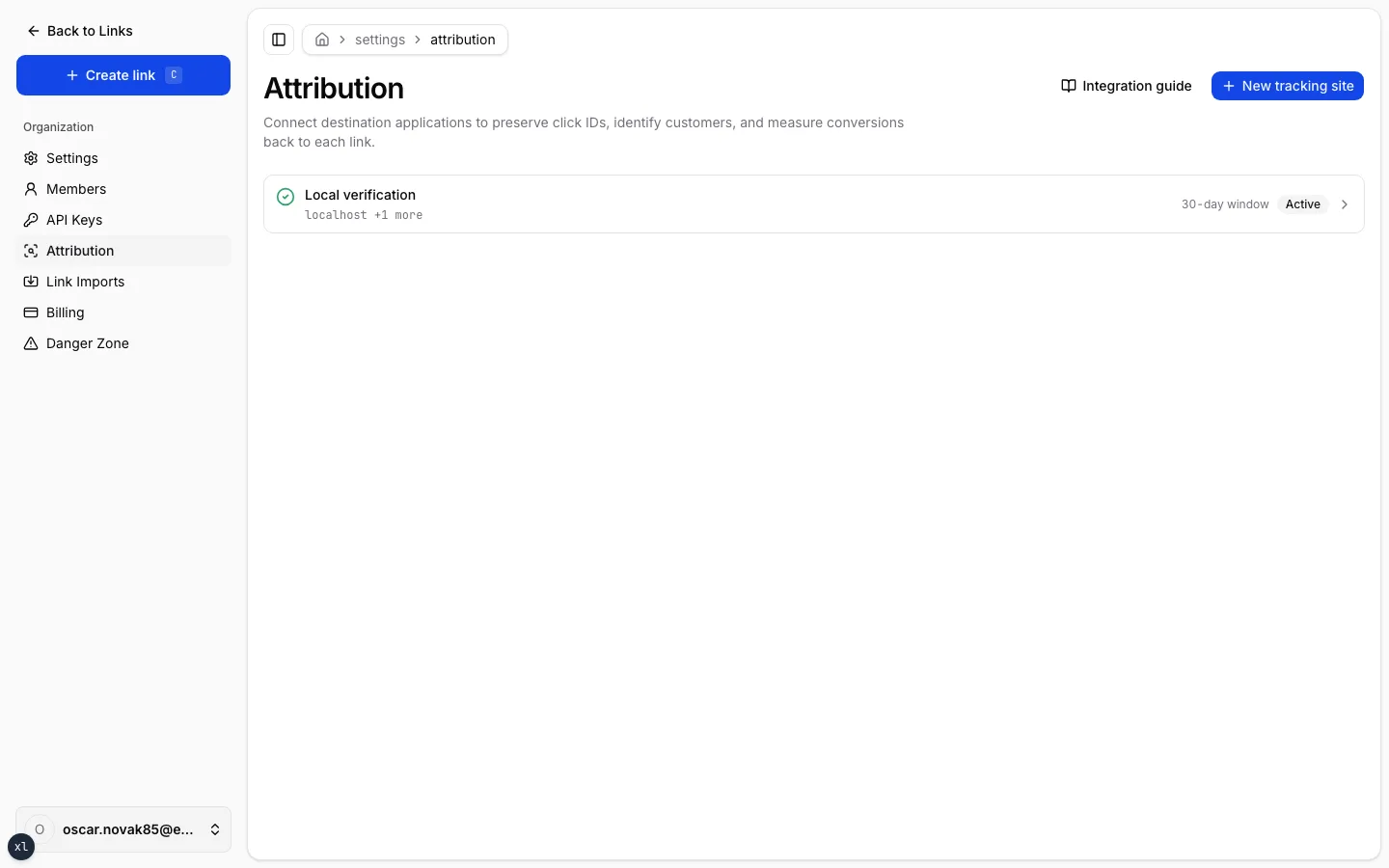
To configure a destination application, open Organization → Attribution, create a tracking site, then follow the Attribution and Events integration guide.
A tracking site is one publishable key plus an origin allowlist and a window
(7–90 days, default 30). Hostnames match exactly — example.com and
www.example.com are two entries. Disable the site to revoke the key without
deleting historical attribution.
When the visitor lands on one domain and converts on another, see Multi-Domain Attribution.
Click, lead, sale
Attribution has three steps, in the order the visit happens.
Click. A visitor opens a sublink. Kliq records the click and passes its identifier to the destination, where the SDK retains it in first-party storage. A stored identifier is never replaced while it is still inside the window, so a site whose own checkout or pricing links are Kliq links keeps crediting the sublink that brought the visitor in rather than the last one they clicked. Once the window lapses, the next click starts a new one.
Lead. The first moment the destination learns who the visitor is. This is
the step that binds the stored click to a customer, so everything afterwards
inherits its attribution. An email from a form is enough — kliq.lead(email)
keys the customer by that address when the application has no user ID yet. A
signed-in user ID is better; use identify for that.
When a customer is identified, Kliq also attaches other recent clicks that share that click's IP address and user-agent. Those extra clicks enrich the customer profile; they do not move first-touch credit to another link.
Sale. Revenue for a customer that already has a lead. Sales come from your server, never the browser, and are keyed by the customer rather than the click. Once a lead establishes first-touch, later server-side sales and installments keep that attribution even after the original click window ends. A later lead from a new eligible click can start a new attribution window.
lead(email) then identify(userId) is one person: Kliq rekeys the email row
onto the application id, or merges the two rows if both already exist. The
browser SDK remembers the user id and will not demote it back to the email.
Two unrelated customers are not merged just because an email string appears in
metadata.
Events and revenue
Destination applications can send named events, conversions, and revenue in minor currency units. Each request should include an idempotency key so retries remain safe.
If the click identifier is missing or expired, a valid user event may be kept as unattributed. Kliq does not fabricate attribution.
Reporting
Compare clicks, identified users, conversions, conversion rate, and revenue by sublink or parent. Imported historical aggregates remain separate from live daily attribution data.